

Having a backyard chicken flock is a lot of work, but it's also a TON of fun! Today, I want to talk about our chickens. I'll discuss their breeds and common characteristics, our birds individual personalities, and whether or not we'd recommend them to new chicken caretakers and why.
Buff Orpington
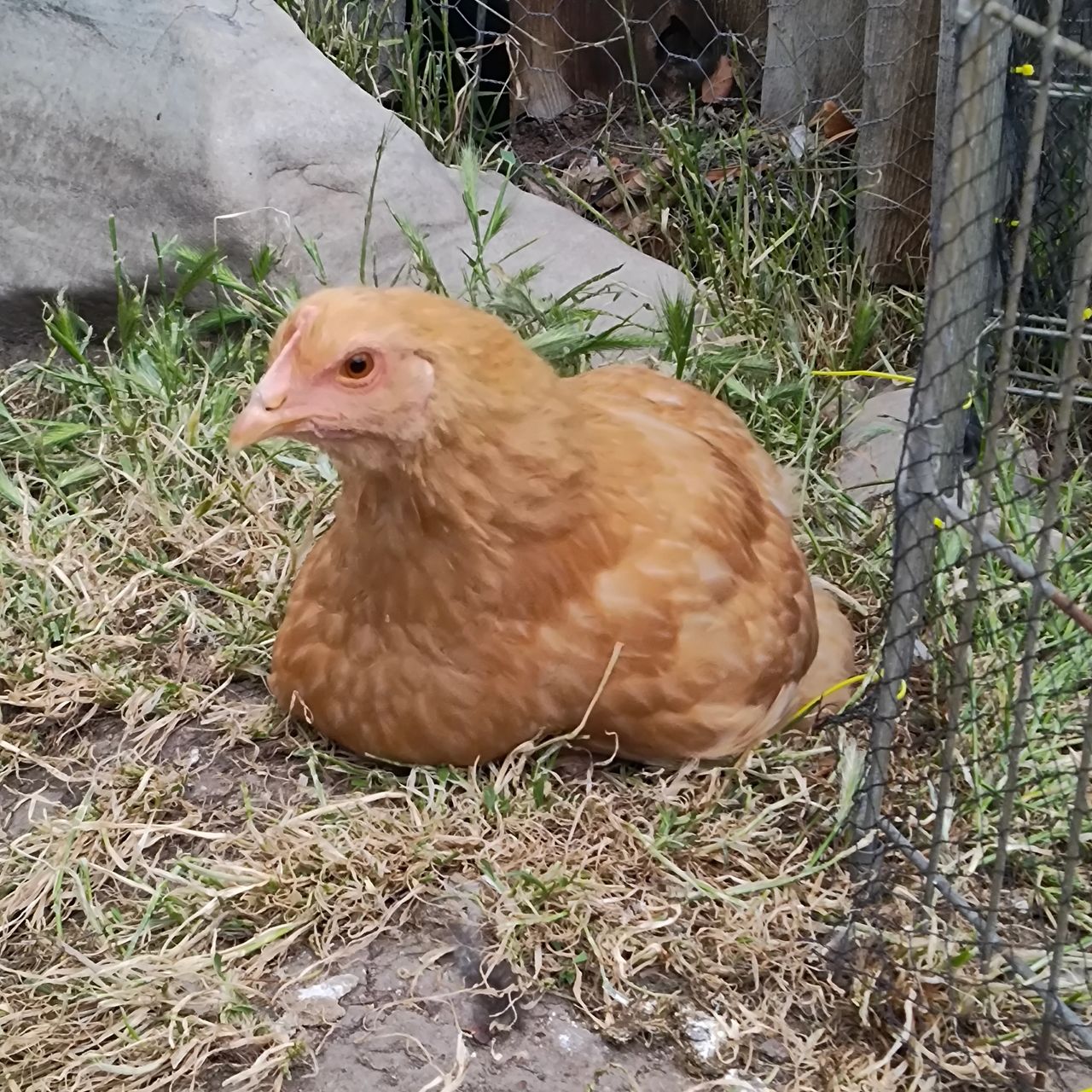
We've had several adorable Buff Orpington hens in our various flocks and these girls have been a joy! They're sweet, typically a little ditzy, and hands down the fluffiest bums around. They're classified as a dual-purpose chicken as good layers and meaty enough to process with good meat yield.
PROS:
- gorgeous; fluffiest bloomers in the yard
- friendly
- moderately chatty, so typically okay for city flocks
- generally healthy
CONS:
- low feed to production ratio; i.e. they eat a lot more than other breeds but are only moderate layers
- prone to over eating and obesity, so you do have to keep an eye on their feed intake
- tendency to be a rooster's "favorite hen" so may need a saddle to protect her back feathers from over mating
- slow bloomers that typically do not start laying until 20+ weeks of age
- prone to broodiness, (but tend to be good mommas if you want to hatch chicks!)
Would we recommend to novice chicken tenders?
Yes! The Buff Orpington chicken is laid back and easy to care for, require some space to forage but not as much as some breeds, aren't flighty, and produce a moderate number of eggs per week.
Australorp

A cousin and descendant of the Buff Orpington, the Australorp is a hardy, high-yield egg laying breed that takes the good qualities of an Orpington - friendly, curious, relatively quiet, generally healthy - and then goes one step further by increasing egg production and a better feed to production ratio. They are also a dual purpose breed, but aren't as fat and fluffy as their cousins and have a few more brain cells to be more predator aware.
PROS:
- egg laying machines that can start laying as early as 18 weeks
- good foragers
- predator savvy
- generally quiet and calm
- generally healthy
- good feed to production ratio
CONS:
- can be a little flighty so top enclosure recommended
- can become broody (pro if you want to hatch babies)
- may struggle in hotter climates bed they are black
Would we recommend the Australorp chicken to new chicken tenders?
Yes! These guys are awesome layers and tend to do well in backyard flocks because they are not typically confrontational, are generally quiet (other than an egg song), are healthy and easy to keep. As an added bonus, a healthy Australorp should have a gorgeous beetle green sheen to their feathers. They aren't usually the most friendly, but they also won't cause any trouble.
Rhode Island Red
The RIR is a popular large farm egg production choice. Our Ruby is super sweet and relatively friendly, is at the top of the pecking order not because she's bossy but because she's the oldest and is respected by the other chickens, and started laying eggs at 20-ish weeks. She also occasionally lays GIGANTIC double yolk eggs, and we're certain we'll eventually get an elusive triple yolk someday. Our overall rating for Ruby would 5/5.
Would we recommend a Rhode Island Red to new chicken tenders?
Maybe... Ruby has she's been great for us, but RIRs have a reputation for being bully birds with extremely aggressive roosters. If you like the look but are unsure about the average temperament, New Hampshire Red's have similar egg laying capabilities but reportedly are better tempered, but unless you're purchasing from a reputable breeder or hatchery you could end up with either from a bin. That could be amazing or a nightmare. So do your own research on this one. 🤣
Delaware Chicken

We accidentally ended up with two Delaware chicks when Pops asked for two Light Brahmas, so we're new to the breed! We also ended up with one pullet and one cockerel, so I feel comfortable generalizing with our experience. We feel like our chickens don't align with our own Internet research, so we may have anomalies that aren't true to a well bred line.
PROS:
- this is a MEATY bird; we could process our boy, Indi, any day and he'd dress out around 8 pounds at 5 months old. Snowball could easily be processed as well at around 5 or more pounds of meat
- even-tempered, even if that's on the high-energy side 🤣
- fast growers, so quick to table!
- Snowball should lay an extra large egg and her pullet eggs are already good sized!
- Indi is turning out to be a decent roo; the terrible teens nearly made him into dinner, but so far I'm satisfied with his temperament as he isn't particularly aggressive but is still attentive with presumable threats
- appear to do pretty well in the Utah summer heat
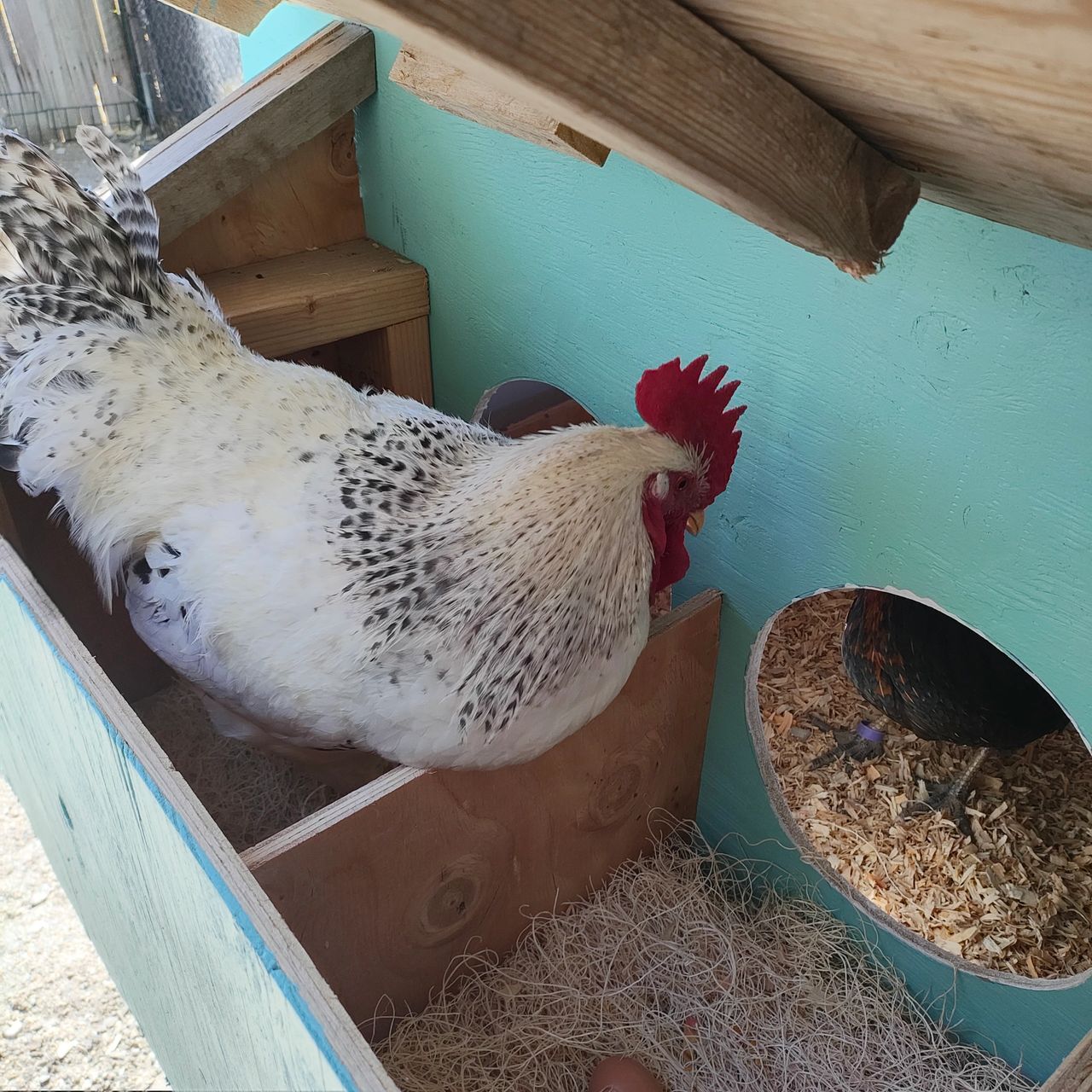
- these two are hilarious! They're curious, like to be in the middle of things, and love exploring. Here's a photo of Indi after he learned that I drop "treats" into the nesting boxes for the girls.
CONS:
- NOISY. Snowball is a chatter box who loudly complains if someone is using the nesting box she wants, if someone gets in her way of scratch, and seems to always have something to say. Indi crows all day and into the night which is a major no-no for cities and many neighbors. Our previous roos would only crow for a little while in the morning and maybe on occasion during the day, but this guy discovered his voice and loves to share it!
- they eat a LOT; naturally, this breed was developed to be a table bird who lays a decent number of eggs per week, so a lot of feed is to be expected. However, we wanted layer breeds and this is a bummer, especially since one ended up being a boy
Would we recommend the Delaware chicken to new chicken tenders?
It depends. If you want to raise fast growing meat birds that don't look like they're sickly, then the Delaware could be a great option. Their meat is reportedly tender and flavorful for their entire lives, so you shouldn't have to worry about processing deadlines with these guys like with other crosses. They're also full of personality. If you're looking for backyard buddies without any specific goal of meat or eggs, then add one or two to your flock! They're absolutely beautiful and seem to have an outgoing cat-like personality.
Black Sex Link or Black Star Chicken
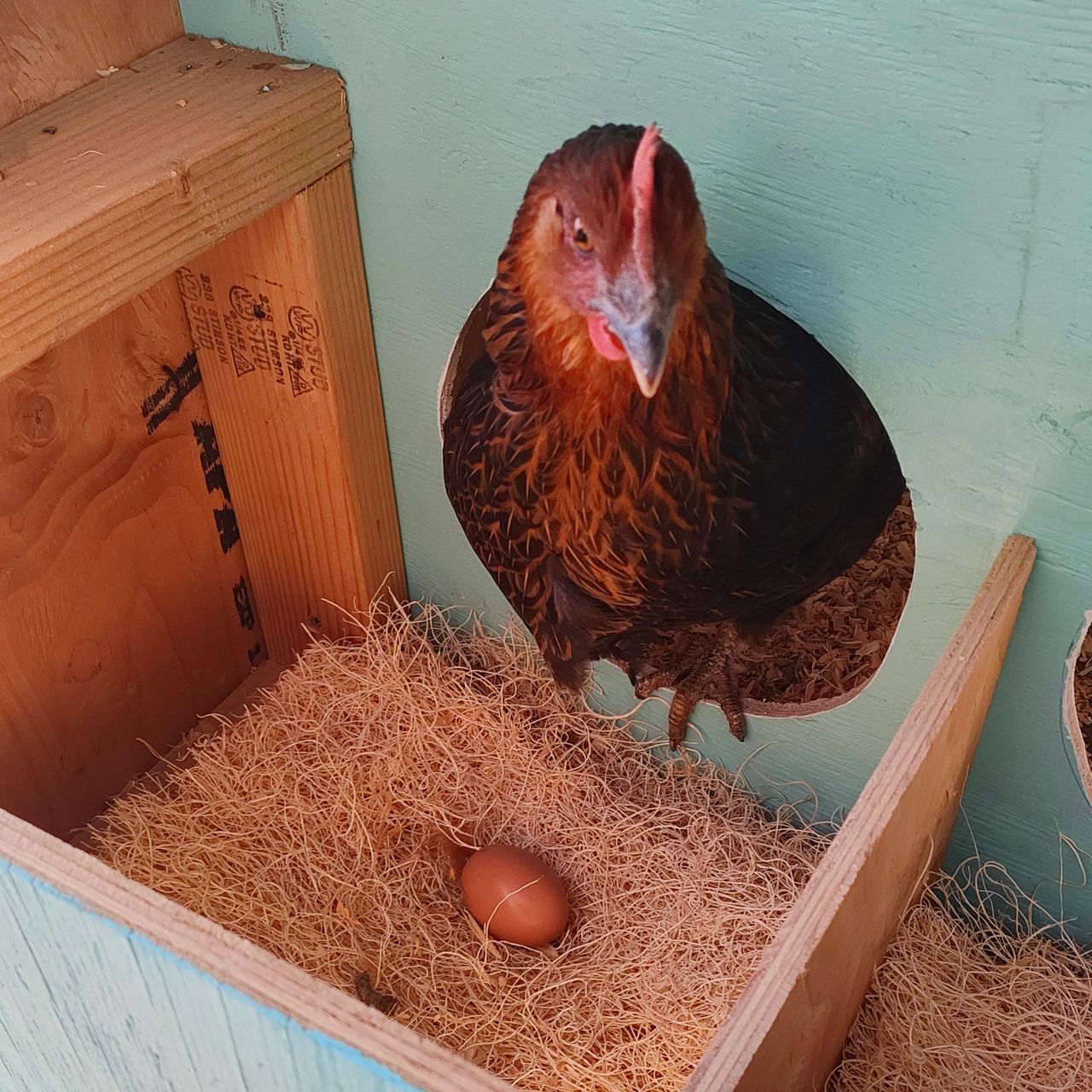
Another new to us breed is the Black Star Chicken. These girls were supposed to have been Barred Rocks, and since this breed was developed by a Rhode Island Red or New Hampshire Red over a Barred Rock hen, we're close, right? 🤣 Here are some of the pros and cons we've discovered with our first three Black Starlettes:
PROs:
- these girls are GORGEOUS! If you want something unique for your flock, Sariah and Poette have grown into absolutely beautiful examples of their hybrid breed. Verdi is a solid black variety, but still absolutely gorgeous!
- early, steady layers; Sariah was our first girl to start the egg laying trend at around 17.5 weeks and Poette started the following week. Verdi started laying shortly after that, so our experience suggests that they should be laying before 19 weeks of age. Other than a super heat wave we had these three are already laying nearly every day.
- intelligent
- assertive
- excellent foragers
- healthy, hybrid breed
- good food to production ratio (these guys aren't piglets like some of the um...others)
CONs:
- moderately noisy; these guys aren't nearly as loud as the Delawares, but they definitely make themselves heard, especially Poette (let's just say there's this nesting box that they all want to be in a the same time every day...)
- flighty; from day 1 these girls were looking for places to roost up high and ways to get out of the brooder
- kinda bossy; this may be a result of the breeds we have, but I was pretty sure Sariah was going to be a roo until she sat for our actual boy. Then she came into full maturity and is a completely different bird. Ironically, once Sariah decided to chill out, Poette stepped in as the bossy one which makes me think this could be a breed trait. Verdi is probably our noisiest throughout the day, loudly cussing me out if I'm late with breakfast and quick to holler when it's her time to lay!
Would we recommend the Black Star chickens to new chicken tenders?
Probably! If you have strict HOA noise ordinances then maybe this isn't a good breed for your backyard flock, but they're all around a solid chicken. Just make sure that your run is enclosed and that they are monitored when out in the open yard because these guys like to be up high. If you're looking for a beautiful, unique looking chicken that produces a ton of eggs starting at an early age, the Black Star may be a good option. I think we'd get these again, only intentionally next time. 😉
Brahmas, Light & Buff
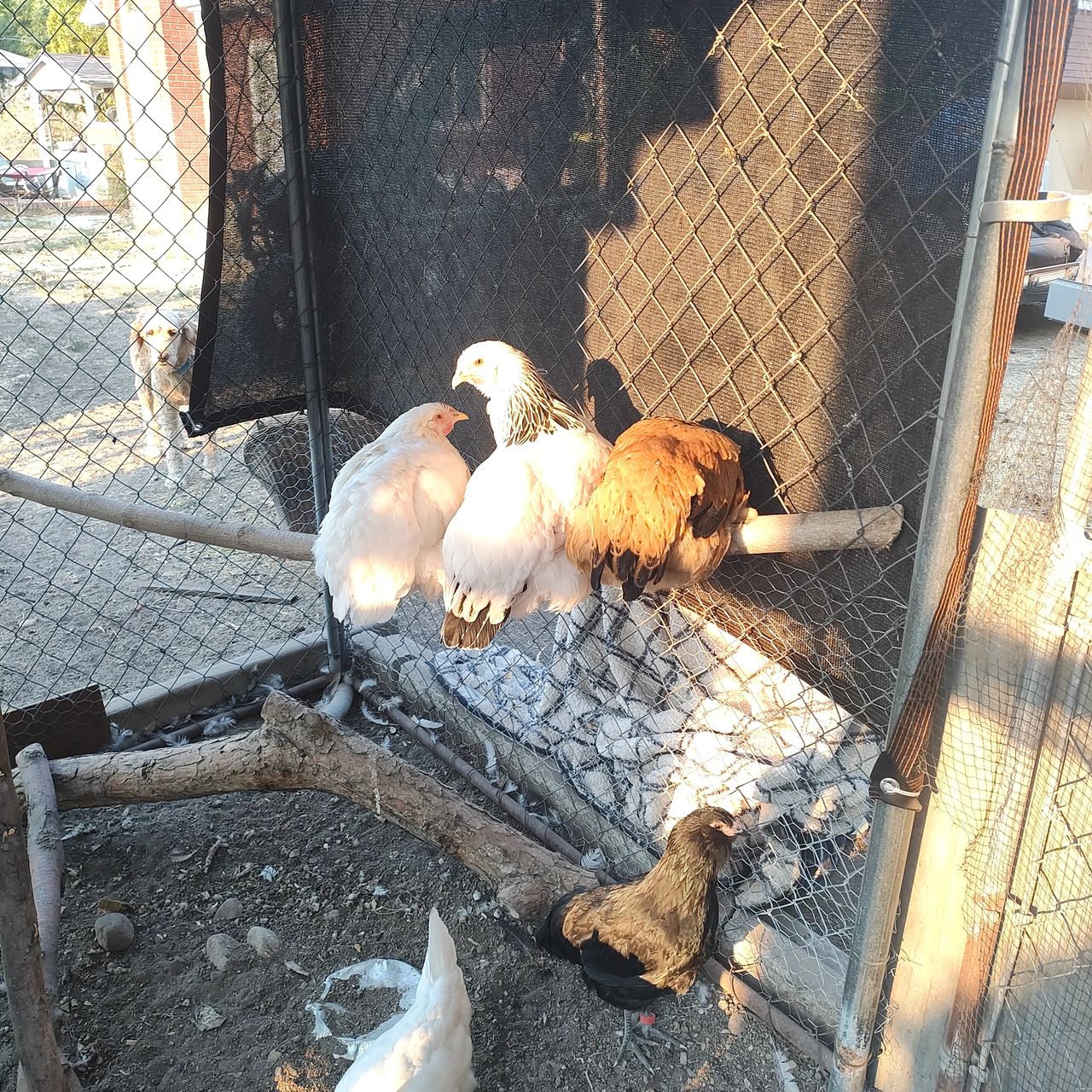
Brahmas are another breed we had with our initial flock and these were Pop's personal request! They are an extra large heritage breed developed to be cold hardy and lay throughout the winter while other breeds slow down egg production. They have small pea combs, thick, super fluffy feathering, and big ol' legs covered in feathers. Ours have all been wonderful with calm temperament and good health, so (other than getting the correct chicks) these were easy to add to our new flocks.
PROs:
- cold hardy for northern climates and long winters
- even tempered; not typically interested in pecking order disagreements
- calm vibe (and yes I did just say that about a chicken!)
- MAJESTIC; these birds are a standout in the flock from every angle
- winter egg layers (although not prolific as they were bred for high meat yield)
- generally very quiet
CONs:
- big bird = lots of feed
- big bird = large chicken doors
- big bird = custom roosting bars; lower, heavy duty (these guys can get up to 10 pounds)
- feathered feet can become a problem for mud, injury, and mites
- have a hard time on hot days
Honestly, most of the cons have nothing to do with their temperament or how they play with other breeds, but simply their size. A big, heavy chicken has specific requirements to keep them safe and healthy that you may not of considered when designing your coop! Also, like all feather-footed chickens, you do need to pay attention to their feet, especially if the ground is wet or icy.
Would we recommend the Brahma chicken to new chicken tenders?
Yes! So long as you're prepared to make a few adjustments to your coop and run to accommodate their giant size, we think that the Brahma is a fantastic new chicken keeper breed. They also don't tolerate the heat well, and we learned an awesome hack from a friend about providing frozen water bottles to our flocks to keep them cool.
Ameracauna
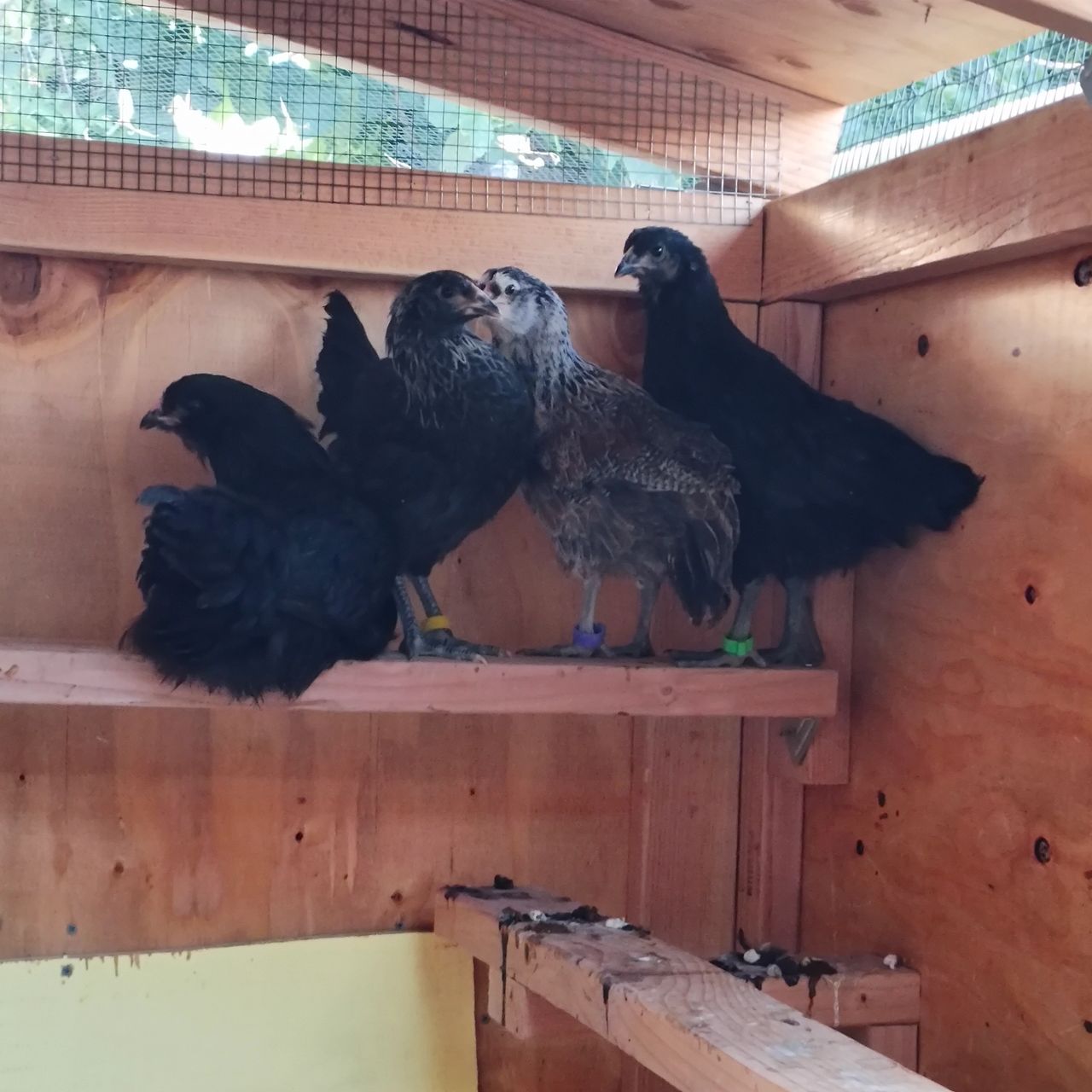
The spelling can get confusing, as well as this breed being one of the key parents to the new backyard mix coined "Easter Egger," but the purebred Ameracauna chicken is unforgettable. Not only do pure lines lay blue or turquoise eggs, they have cute fluffy cheeks and beards called "muffs", rose combs, and stunning feather patterns.
PROS:
- cold hardy
- friendly & curious
- healthy
- beautiful!
- medium size for smaller areas
- good foragers
- generally quiet
- predator aware
- good feed conversion ratio
CONS:
- flighty
- prone to mites and lice in their muffs
- roos can be aggressive
- average layers, about 200-250 yearly
- slow to mature; can take 30+ weeks to start laying
Would we recommend the Ameracauna chicken breed to new chicken tenders?
Under certain circumstances. Why? Our Ameracaunas are somehow extra smart, so the stinkers need an extra locked down run for their own safety. They are super fun and generally easy enough to care for, but even though the Internet tends to tout the roosters as sweet and gentle, ours have always been headstrong and somewhat aggressive. This can be awesome if you have a free range flock and need a protector, but even our hand-raised boys aren't allowed to be around young children. These guys are lightweight and can fly high and fast, so unless you give them all the good reasons to stick around, your curious Ameracaunas could risk getting out of their designated areas. That being said, our girls have always had wonderful temperaments and have been family favorites, sitting in laps or hanging out on the swings on cool summer days. None of our girls have been bullies or especially loud, so they could be a good option for your backyard flock. Just know that they love to forage, so they can be destructive to flower beds or gardens and need more space outside the coop.
Jersey Giant
 Another new-to-us breed (two intentional, two not so much) is the Jersey Giant. These birds are also a very big bird, like Brahmas, and require a few adjustments to coops and runs. We have two Black Jersey girls, Coal and Zuzu (that were supposed to be Australorps) and two Blue Jerseys from a local breeder. Our Blue hen, Pearl is stunning with the "splash" coloring, and our rooster, Vinny, is black with his feathers shining blue, turquois, and purples in the sunlight.
PROs:
- generally quiet
- great feed conversion ratio
- winter layers with higher than average laying year-round
- cold and heat hardy
- lighter weight than Brahmas, but still a formidable table bird
- food motivated (super helpful to chum everyone back into the run after foraging time)!
CONs:
- need extra space: in nesting boxes, on roosting bars, to forage, in runs, etc.
- roosters have a reputation for being jerks
- not particularly cuddly, stand-offish
Would we recommend the Jersey Giant to new chicken keepers?
Yes and no. If you aren't looking to snuggle your chickens every day and are good with intelligent, self-sufficient foragers, then they could be great! This breed is hardy, awesome year-round layers, beautiful on the pasture, and not as expensive to feed as other large or extra-large breeds. Our hens are generally very quiet and efficient layers; we haven't had any attempt to go broody and egg songs are short lived. Our rooster, Vinny, likes to crow, but I honestly wonder if he would crow as often if there weren't another roo to egg him on! If you have limited space, a flock of these guys may not be a good option. They require a lot of space to roam and forage, so I don't imagine that they would do well in a small yard. If you're interested in the Jersey Giant breed, I recommend talking with a reputable breeder to get their take on your setup and be ready to make accommodations if you get them. Personally, I would consider having a whole flock of Jersey's on my homestead!
I hope that this blog was informative and helpful for anyone looking to start their own flock or perhaps add new breeds to their current one.
Just know that chicken math is very real and we at the Crazy Coop Creations will not judge you if your six chicks turn into 20+ as our flock did!
As always friends, stay meepy!
- The Triple-C Team
Bonus Question:
Would we recommend roosters to new chicken keepers?
Another major question when getting chickens is whether or not to keep males, or roosters. I don't believe that there is a cut-and-dry answer to this question, and honestly could write an entire blog post on this alone, so here (since we're talking about breeds) I want to give a quick summary of our current boys, Indi the Delaware and Vinny the Jersey Giant.
Indi

PROs:
- If he turned out a turd he would have been an excellent Thanksgiving dinner!
- His temperament is wonderful!
- He's good to his girls
- He is typically very aware of his flock's surroundings
- He's good at keeping his girls together
- He has the trust of his girls, which speaks volumes!
- I would trust him around children with an adult present with little to no concerns
CONs:
- He's kind of a chicken... which sounds both silly and obvious. To explain, he is very good at keeping an eye out, but even as quick as he is to alert and call the girls in, I am uncertain if he would ever go after a cat or large bird attacking the flock.
- His breed was meant for the table, so this boy can eat! We aren't breeding, so it's sometimes tricky to rationalize keeping him when he doesn't contribute to egg production (you do NOT need a rooster around for hens to lay eggs)
- He is LOUD. As mentioned previously, this guy likes to crow. All day. Every day. Like it's his full-time job. If this is typical of his breed, I would never intentionally get a Delaware rooster living within city limits, even with his great personality.
Vinny

PROs:
- Doesn't eat as much as Indi
- Isn't quite as passionate about yelling all day
- Is very aware of surroundings
- Was sick as a chick, so he seems to be staying a little smaller than his breed standard. The Jersey Giant is a slower to mature breed, though, so he may still have a growth spurt or two in him. It's just nice that he isn't as big and heavy since his flock has smaller girls.
- He...tries to keep his girls in line
- He's gone after our cats when they run around the yard during foraging time and would likely go after a dog or racoon or hawk
CONs:
- He's rough on the ladies and always has been. His days are numbered if he doesn't start chilling out (he's 8 months old so should start calming down...)
- Since he's so rough with the girls, they don't respect him
- He has a tendency to be more protective of his mating favorites instead of his whole flock
- When both flocks are out in the yard, he has a tendency to be more concerned about Indi that keeping his girls safe
- He's a slow learner when it comes to respecting people
- I wouldn't trust him around new people or children, especially without constant supervision
In summary:
Vinny is aware of his surroundings and protects his girls, but he's a hothead who thinks he's all that and a bag of chips. He's also at the tail-end of crazy teenage hormones, so I'll have to add an update as to whether or not he gets to stick around after the spring. He has the potential to be a good pasture rooster, but we're still on the fence about him being a backyard kind of guy. Other chicken people are also weary about having Jersey Giant roosters for their tendency to being territorial and aggressive towards kids, and where this breed gets HUGE, that could be a major no-go for a lot of folks.
On the flipside, Indi has proven to be far more family-friendly. I wouldn't let him be unsupervised around new people, but I wouldn't be nearly as concerned of an older child he is familiar with being around his flock. Honestly, he's a sweet boy and if he didn't insist on yelling all day I'd give him a 10/10 score! He's a little rough for the girls because he's just so big, but he isn't aggressive about mating and hasn't really hurt any of them since his wild hormone teen months. He even learned to "kennel up" when he was in the height of uncontrollable sex-drive, and even though it made him sad, he understood well enough that he was being put away so his newly maturing girls could have a break (Vinny didn't quite get the memo).
Should you get a rooster? Depends. I'd say if you don't need one don't get one. And if you get one and don't want one, find someone to take him. Just don't dump him. That's cruel.
A rooster can be an amazing asset for your flock's protection and keeping the peace between hens, and there are a lot of really great roosters out there! That being said, there's also no reason to keep an aggressive or abusive rooster, especially in your backyard. But if you aren't looking to breed, live in an HOA that doesn't allow them, have young children that you want to spend time with chickens, or only want/need two or three chickens to keep your own family in fresh eggs, then don't have one.
But with all that, no rooster should ever be left alone with young children under any circumstances. They are animals with very real instincts and cannot be faulted for doing what they were created to do. Even the best tempered gentleman rooster has a job and knows it, and the child that snuggled and kissed an loved him running at his hens with a bat is now considered a threat. The same goes for the family dog or cat. If you aren't willing to or able to train pets and kids or to take on the liability of having a rooster on your property, then do not have one. I'll go into this more in a later blog post because it is something that I am passionate about. I feel that social media has set a lot of new chicken keepers up for failure regarding roosters, too.
If you made it all the way through, I appreciate your patience! I hope you have a wonderful time deciding on which breeds to keep in your backyard flock and that you have a joyous time with your chickens.
Sincerely,
T.
0 comments